

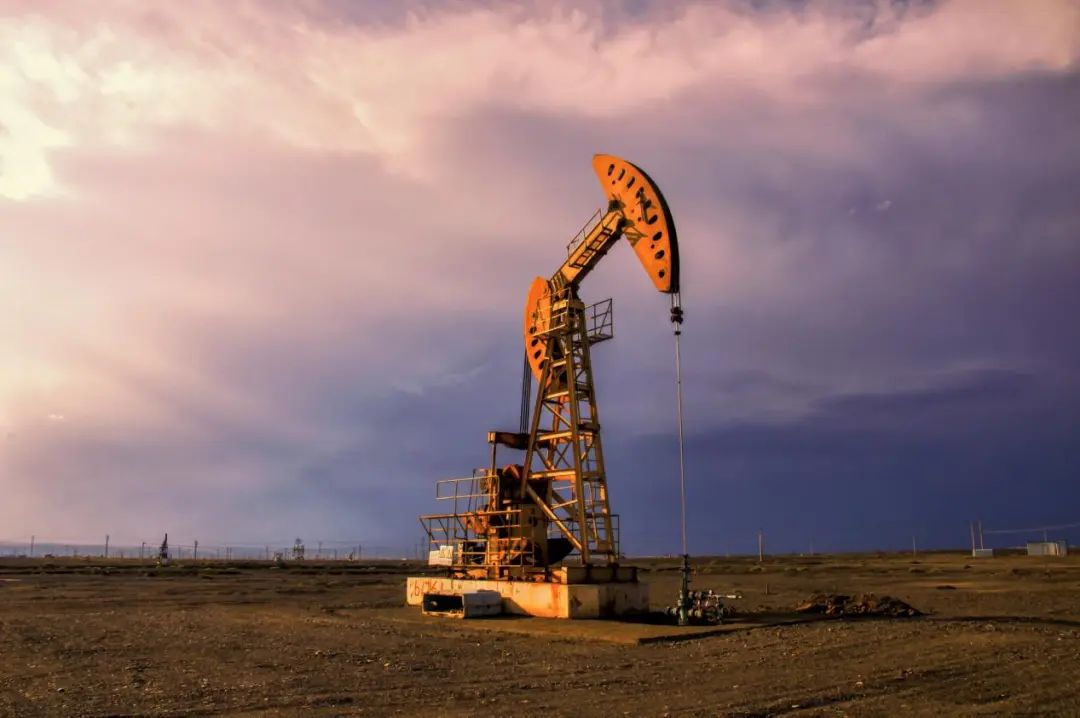
Every leap in the oil and gas industry cannot be separated from the dual drive of technology and materials. In the wave of the new era, new materials, with their unique properties and wide application prospects, have become a key force in promoting technological innovation in oil and gas exploration and development engineering. From the toughness of reinforced fibers to the green wisdom of degradable polymers, the application of each new material in the upstream field is a powerful challenge to the limits of oil and gas production, which not only enhances the efficiency and effectiveness of exploration and development, but also shows great potential in guaranteeing the production safety and promoting the environmental friendliness. This is a deep integration of materials science and oil and gas engineering, and a profound change for future energy development.
From making pumping rods to repairing gathering pipelines, in recent years, carbon fiber composites, with their unique performance advantages, have effectively solved many of the problems of traditional metal materials, and improved the safety, efficiency and economic benefits of oilfield production.
As early as 2016, Shengli Oilfield set up a carbon fiber pumping rod project to start the journey of carbon fiber application, and developed the first generation of round cross-section pure carbon fiber pumping rods on the basis of flat belt-shaped carbon fiber pumping rods. Carbon fiber sucker rod overcomes the traditional steel sucker rod corrosion, short life, lower depth limit, high energy consumption, long working time, anti-corrosion life extension, deep pumping to lift the liquid, energy saving and other significant effects.
As one of the core R&D teams of the project, Shengli Oilfield Technical Inspection Center has established carbon fiber composite pumping rod testing and evaluation indexes and method systems after painstaking research and development for the lack of evaluation indexes and method systems, and realized continuous online full-section testing of carbon fiber pumping rods, which provides technical guarantee for the on-site application of the pumping rods.
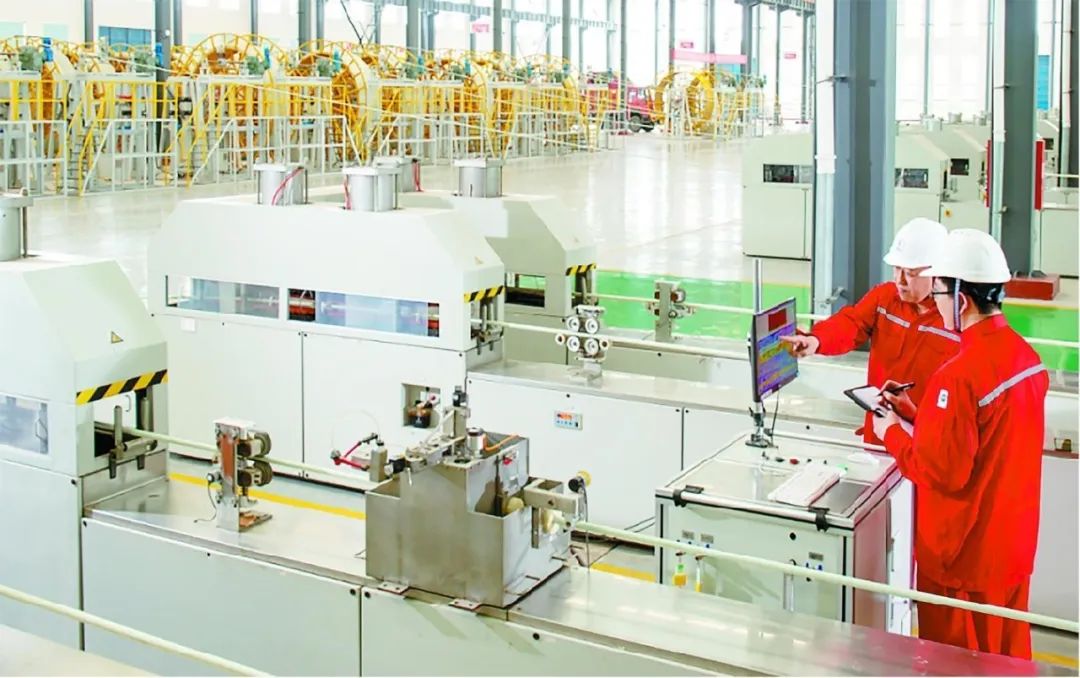
Technicians check carbon fiber sucker rod production line
Around the carbon fiber pumping rod applications encountered in the rod breakage, cracking and other issues, the R & D team from the carbon fiber curing time, extrusion speed and other production processes, comprehensive testing and analysis of the parameters of the rod body comprehensive performance of the influence of the law, by adjusting the structure of the rod body, optimize the curing process, and other measures to continuously improve the product performance, breakage, cracking failure rate of 36% down to 0%.
Carbon fiber composite materials, although strong corrosion resistance, but in the downhole high temperature, high pressure, high mineralization oil and water media environment and the joint action of the alternating load, there is also aging, damage phenomenon. To this end, Shengli Oilfield Technology and Testing Center through simulation tests, research the mechanical properties of carbon fiber sucker rod evolution law, to determine the limits of its application in different oil well conditions and environments, for the carbon fiber sucker rod design, selection and maintenance provides a scientific basis.
According to statistics, more than 1.12 million meters of carbon fiber pumping rods have been industrially applied in 961 wells in Shengli, Northwest, Central Plains and other oilfields, with a cumulative increase of more than 170,000 tons of oil, power savings of more than 13 million kilowatt hours, the longest production cycle of 1526 days, and an average check pumping cycle of corroded wells extended by 1.5 times, with a direct economic benefit of more than 300 million yuan.
As the research continues to deepen, the application field of carbon fiber has also been further expanded. After continuous research, the R & D team innovated and formed a carbon fiber reinforcement process, 3D composite tank roof structure design technology, in situ repair and enhancement of the integrated construction process, etc., breaking through the resin system in the underwater and other humid environments can not be cured in the technical difficulties, so that carbon fiber in the gathering pipeline and container repair to make a big difference. The application of the new material not only greatly reduces the probability of safety and environmental protection events such as “running, bubbling, dripping and leaking”, but also effectively reduces the consumption of materials, saves operating costs, and compared with the traditional restoration process, without stopping the transmission, the restoration efficiency to enhance more than two times.
In the future, with the in-depth application of carbon fiber composites in oilfield production, its huge potential in improving energy extraction efficiency, reducing operating costs, promoting environmental protection, etc., will further promote China's oil and gas industry to a more intelligent, efficient and green direction.
Carbon Fiber
Material Characteristics
Carbon fiber is a new type of high-strength, high-modulus fiber material containing more than 95% carbon. Carbon fiber has excellent mechanical properties, the diameter is only 1/15 of the hair, the specific gravity is less than 1/4 of the steel, but the strength is 7~9 times of the steel, but also has the characteristics of corrosion resistance, high modulus, known as “the king of the new materials”, has a wide range of application prospects in various industries.
Common products
The longest length of carbon fiber pumping rod can reach 5000 meters, which successfully overcomes the shortcomings of the past pumping rod such as needing to be connected with the sleeve rod, long working time for starting and stopping, easy to corrode and short service life of metal rod, and high power consumption in operation, etc. Moreover, it is not easy to be deformed when going down to the wells for thousands of meters, and the power consumption of oil extraction can be reduced by about 30% per kilometer of ton of oil, which can help the oilfield enterprises to reduce the cost of production.
Carbon fiber composite material righting device is corrosion-resistant, high strength, low friction coefficient, which can effectively solve the problem of downhole corrosion and misalignment, and play an important role in reducing the rod and pipe scrap rate, extending the maintenance-free period of the oil well, and improving the production time and so on.
Carbon fiber cloth is applicable to the floating roof and tank top reinforcement of oil tanks, especially the construction of complex parts such as curved surfaces and bending members, which is easy to operate and helps to shorten the construction period and reduce the cost of the project.
Source: China Petrochemical News, Internet, China Petrochemical Newspaper
Disclaimer: The articles published by WeChat of China Composites Society are only for the exchange and sharing of professional knowledge and market information on composite materials, and are not used for any commercial purpose. If any individual or organization has any doubt about the copyright of the article or the authenticity and accuracy of its content, please contact us at the first time. We will deal with it in time.